
30-second triage
- Stop Wet Sand
A continuing pile hides which path failed first.
- Clear below the Shaker
Follow the lower Gold route away from every Shaker and remove any obstruction.
- Clear the Residue side
Remove the top cap and reopen the slow side output.
- Inspect inside
Look for raw Sand or another non-Gold solid trapped in the Shaker body.
- Restart one shallow batch
Watch Wet Sand settle, Gold leave below, and Residue leave separately before continuous feed resumes.
| Path | Typical symptom | What to inspect | First response |
|---|---|---|---|
| Input | Wet Sand piling up in a deep layer | Feed depth and whether raw Sand reaches the surface | Stop input and restart one shallow batch. |
| Top output | A Residue cap covers the Shakers | Side exit, upward lip, and available buffer space | Clear the Residue side before adding feed. |
| Bottom output | Gold not falling through or visible Gold cannot leave | Open cells below the bank and the route to collection | Clear below every Shaker. |
| Internal contamination | The bank stays stopped after both surfaces look clear | Non-Gold material trapped inside the Shaker body | Remove the trapped solid manually. |
If this is the first production line, compare the outputs with the first Gold factory checkpoints. Use the main Filters guide only when mixed material needs a separate route; a Filter cannot repair a blocked Shaker exit. After both outputs move again, the recipes and production chains overview shows where Residue goes next.
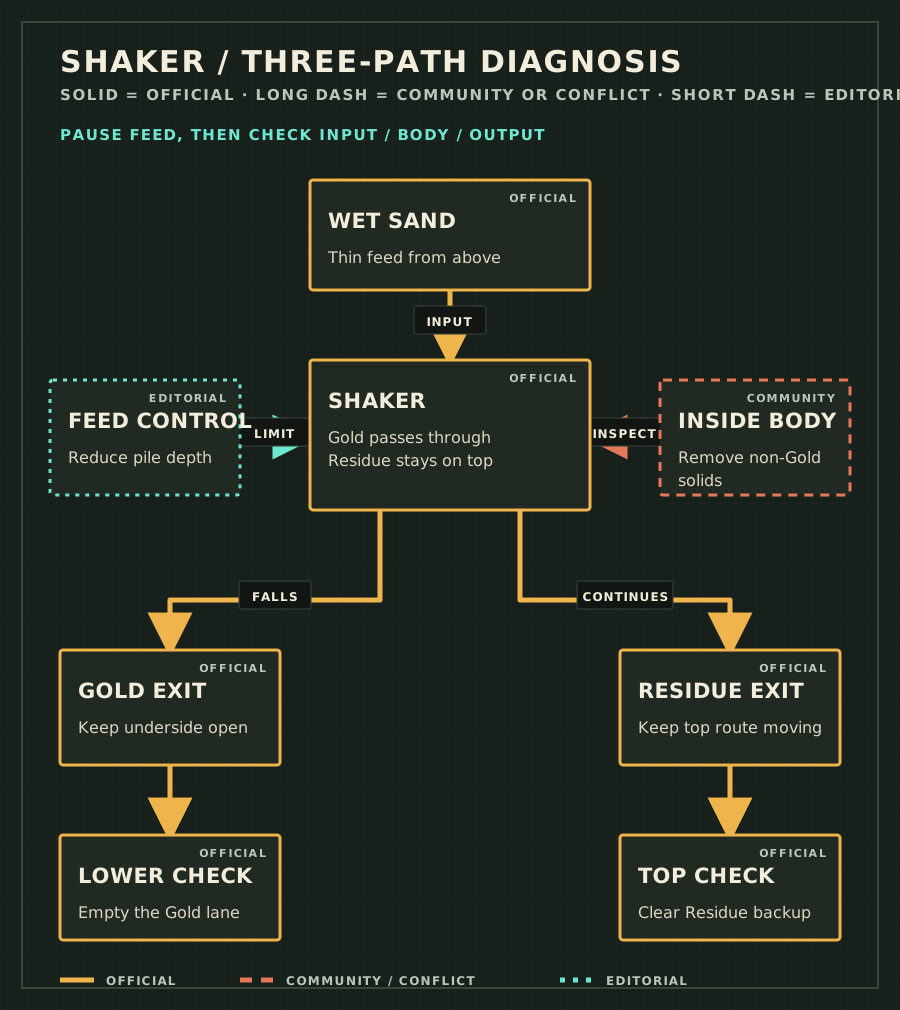
Feed throttling and long staircase overload
The official Shaker tip recommends a downward staircase because denser Wet Sand settles while lighter Residue rises toward the side. That principle does not establish one bank length. Current layouts show that one long staircase can still overload when its top output or feed distribution cannot stay clear. Several shorter banks, a shallow feed, and visible service gaps are practical recommendations rather than one official arrangement.
| Symptom | Likely cause or path | Check and fix |
|---|---|---|
| Wet Sand piling up | Input is too deep or Residue is blocking the surface. | Pause feed, clear the top, and restart shallow. |
| Residue cap | Top output is slow, uphill, or obstructed. | Open the side route and a temporary buffer. |
| Gold not falling through | Bottom output or the internal body is obstructed. | Clear the underside, then inspect for contamination. |
| Raw Sand entering the Shaker | Wetting or upstream separation failed. | Stop the line and repair the Wet Sand boundary. |
| Non-Gold material trapped inside | A solid entered the body rather than remaining on top. | Remove it manually before restarting. |
| Long staircase overload | One input and one output cannot keep the full bank readable. | Split into shorter banks and throttle each feed. |
| Source period | Terminology | What still applies | What not to copy blindly |
|---|---|---|---|
| Current Early Access terminology | Wet Sand, Residue, Gold, Shaker | Input above, Residue on top, Gold below, contamination check | No fixed bank length, rate, or universal footprint. |
| Legacy Demo terminology | Some guides say Slag or use older controls | The input-process-two-output diagnostic pattern | Old names, research costs, machine counts, and Demo-only layout claims. |
Update record
- 2026-08-24 — Retargeted the page to Shaker-not-working language, put the clearing order first, and separated the full Gold factory intent.
- 2026-08-23 — Added four-path triage, current-versus-Demo terminology, and explicit shorter-bank/feed boundaries.
- 2026-08-21 — Replaced the unsupported Shaker Layout page with symptom-led clogging guidance.
Frequently asked questions
What should enter a Shaker?
Wet Sand belongs on top. Raw Sand and other non-Gold solids have no documented Shaker process path and can hide the real blockage.
Why is Gold visible but not falling through?
Gold is the only solid documented to pass through a Shaker. Clear the lower route and inspect the Shaker body for trapped non-Gold material before increasing Wet Sand input.
How many Shakers should a bank use?
No checked source establishes one universal count. Prove that a short bank clears Wet Sand, Residue, and Gold, then add capacity only when the failed path is visible.